

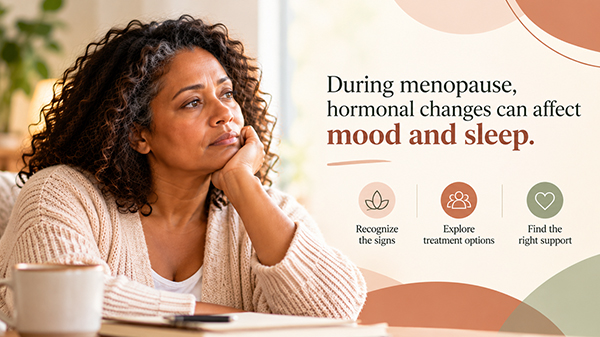
Menopause is often discussed in terms of hot flashes, night sweats, and changes in menstruation. Yet emotional health deserves equal attention. Depression during menopause is a real concern, and recognizing symptoms early can help women access appropriate care without shame or delay.
Why Mood Can Change
During perimenopause—the transition leading up to menopause—fluctuating hormones may affect mood and sleep. Research suggests that vulnerability to depression increases during this transition, including among some women with no previous history of depression. However, not every mood change is clinical depression, and menopause is not the sole explanation for emotional distress.
Recognizing Depression
Symptoms may include ongoing sadness, loss of interest in activities, irritability, hopelessness, difficulty concentrating, changes in appetite, disrupted sleep, or feeling exhausted despite rest. These experiences can overlap with menopause symptoms, making it easy to dismiss them as “just hormones.” If symptoms persist, worsen, or interfere with relationships, work, or daily life, speak with a qualified healthcare professional.
Care Should Be Individualized
There is no single treatment that suits everyone. A clinician can assess mood symptoms, medical history, sleep, medications, and other possible contributors. Depending on individual needs, treatment may include psychotherapy, antidepressant medication, lifestyle support, or menopause hormone therapy when appropriate. Hormone therapy is not a universal treatment for depression, so decisions should be made with a knowledgeable clinician after discussing benefits, risks, and personal health factors.
Small Steps, Meaningful Support
Protecting sleep, staying physically active as able, maintaining social connections, and sharing concerns with trusted people may support overall well-being. These steps can complement professional care, but they should not replace assessment when depression is suspected.
A Compassionate Path Forward
Dr. Priti Kothari recognizes the importance of considering biological, psychological, and social factors in mental health. Women experiencing depression during menopause should not have to navigate it alone. An honest conversation with a healthcare professional can clarify what is happening and help identify next steps.
If you experience thoughts of suicide or feel unable to stay safe, seek immediate help through local emergency services or a crisis line.
This article is for educational purposes only and does not replace personalized medical advice.