
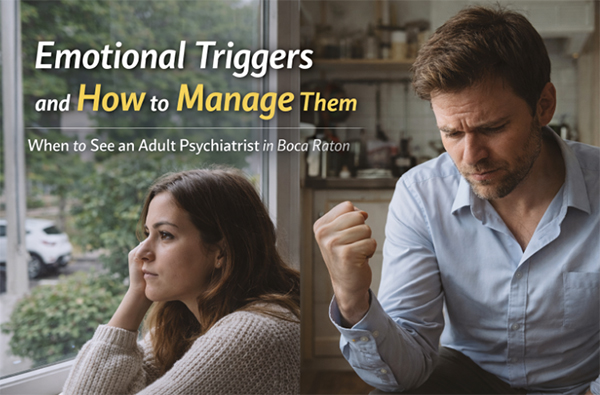
Emotional triggers are powerful reactions to specific situations, words, or memories that evoke intense feelings—often disproportionate to the present moment. While everyone experiences triggers, frequent or overwhelming emotional responses may signal underlying stress, trauma, anxiety, depression, or unresolved life experiences.
If you find yourself reacting strongly to workplace conflict, relationship challenges, criticism, or reminders of past events, you’re not alone. Understanding emotional triggers is the first step toward regaining emotional balance and mental clarity.
For individuals seeking support from an adult psychiatrist in Boca Raton, professional guidance can provide structured tools to manage emotional reactivity and improve overall mental wellness.
What Are Emotional Triggers?
An emotional trigger is a stimulus—internal or external—that activates a strong emotional response. These reactions may include:
- Sudden anger or irritability
- Anxiety or panic
- Sadness or tearfulness
- Withdrawal or shutdown
- Feelings of shame or guilt
- Physical symptoms (racing heart, tight chest, sweating)
Triggers often connect to:
- Past trauma or adverse experiences
- Chronic stress
- Relationship conflict
- Workplace pressure
- Childhood patterns
- Major life transitions (divorce, job loss, illness)
The brain’s emotional center (the amygdala) can react quickly, sometimes before the rational part of the brain (prefrontal cortex) fully processes the situation. This is why reactions can feel automatic or uncontrollable.
Common Emotional Triggers in Adults
1. Criticism or Rejection
Even mild feedback may trigger deep feelings of inadequacy or fear of failure.
2. Conflict or Raised Voices
For some individuals, arguments may activate anxiety linked to earlier experiences.
3. Feeling Out of Control
Unexpected changes, uncertainty, or unpredictability can heighten stress responses.
4. Financial or Career Stress
Work pressure and job insecurity frequently contribute to emotional reactivity.
5. Relationship Insecurity
Attachment patterns can influence how we respond to perceived distance or conflict.
Why Managing Emotional Triggers Matters
Unmanaged triggers can lead to:
- Strained relationships
- Workplace difficulties
- Increased anxiety or depressive symptoms
- Poor impulse control
- Substance misuse
- Chronic stress and burnout
Over time, repeated emotional dysregulation may impact both mental and physical health.
Working with an experienced adult psychiatrist in Boca Raton can help identify underlying causes and create a personalized treatment approach.
Practical Strategies to Manage Emotional Triggers
1. Increase Self-Awareness
Start by tracking:
- What happened?
- What emotion did I feel?
- How intense was it?
- What thoughts accompanied it?
Journaling can help identify patterns over time.
2. Pause Before Reacting
Practice the “STOP” method:
- Stop
- Take a breath
- Observe your thoughts and feelings
- Proceed thoughtfully
Even a 10-second pause can reduce impulsive reactions.
3. Practice Emotional Regulation Techniques
- Deep breathing exercises
- Progressive muscle relaxation
- Grounding techniques (5-4-3-2-1 sensory method)
- Mindfulness meditation
These techniques help calm the nervous system.
4. Challenge Automatic Thoughts
Ask yourself:
- Is this reaction based on facts or assumptions?
- Am I responding to the present—or to the past?
Cognitive reframing can reduce emotional intensity.
5. Improve Communication Skills
Learning to express feelings clearly and assertively can prevent misunderstandings and resentment.
6. Seek Professional Support
If triggers feel overwhelming, frequent, or tied to trauma, therapy or psychiatric care can be highly beneficial.
When to Seek Professional Help
Consider consulting an adult psychiatrist in Boca Raton if you experience:
- Intense mood swings
- Panic attacks
- Anger outbursts affecting relationships
- Difficulty controlling emotional responses
- Sleep disturbances related to stress
- Symptoms of anxiety, depression, or PTSD
Psychiatric evaluation can determine whether therapy, lifestyle changes, or medication may help restore balance.
About Dr. Priti Kothari
Dr. Priti Kothari is a compassionate and experienced adult psychiatrist in Boca Raton dedicated to helping individuals navigate emotional challenges, anxiety, mood disorders, trauma-related concerns, and life transitions.
She provides personalized, evidence-based care tailored to each patient’s unique experiences and goals. Dr. Kothari focuses on creating a supportive, nonjudgmental environment where patients feel heard and empowered to build healthier coping strategies.
Her approach integrates psychiatric evaluation, medication management when appropriate, and collaboration with therapists to ensure comprehensive mental health support.
Frequently Asked Questions (FAQ)
What causes emotional triggers?
Triggers often stem from unresolved stress, trauma, attachment patterns, or learned responses from earlier life experiences.
Can emotional triggers be eliminated?
While triggers may not completely disappear, they can become significantly more manageable with proper tools and treatment.
Is medication necessary to manage emotional triggers?
Not always. Many individuals benefit from therapy alone. However, if triggers are connected to anxiety, depression, or trauma disorders, medication may be recommended as part of a treatment plan.
How long does it take to improve emotional regulation?
Improvement varies by individual. Many people notice positive changes within a few weeks to months of consistent therapeutic work.
How can I schedule an appointment with an adult psychiatrist in Boca Raton?
Contact Dr. Kothari’s office to schedule a confidential consultation and begin developing healthier emotional coping strategies.
References
- American Psychological Association. (2023). Stress effects on the body.
https://www.apa.org/topics/stress/body - National Institute of Mental Health. (2023). Anxiety Disorders.
https://www.nimh.nih.gov/health/topics/anxiety-disorders - Substance Abuse and Mental Health Services Administration (SAMHSA). (2022). Understanding trauma and stress-related disorders.
https://www.samhsa.gov/trauma-violence - Harvard Health Publishing. (2022). Understanding the stress response.
https://www.health.harvard.edu/staying-healthy/understanding-the-stress-response - National Alliance on Mental Illness (NAMI). (2023). Managing Stress and Emotional Health.
https://www.nami.org/About-Mental-Illness/Common-with-Mental-Illness/Stress