
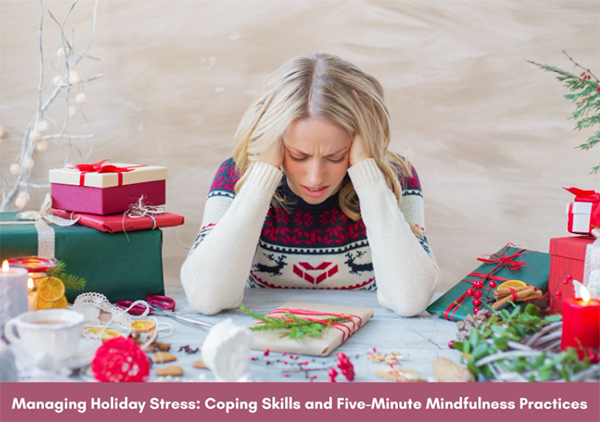
The holiday season can often bring stress, with social obligations, financial pressures, and heightened emotional expectations. Developing healthy coping strategies is key to managing this stress in ways that support emotional well-being. Practices such as exercise, self-care, and meditation can help boost overall wellness.
One effective way to manage holiday stress is through mindfulness. Taking a few moments for focused breathing or short meditation sessions can calm both the body and the mind, reducing the stress response. Mindfulness can also involve brief pauses throughout the day to notice your breath or the sights and sounds around you, helping you stay fully present in the moment.
What Is Coping
Coping is defined as the specific set of thoughts and behaviors mobilized to manage internal and external stressful situations. It functions as a psychological response system that is designed to help individuals navigate difficult circumstances. This process is generally divided into two approaches: reactive coping, which is the immediate reaction to an existing stressor, and proactive coping, which aims to neutralize or head off potential stressors before they occur.

Four Main Pillars of Coping
In order to better understand how individuals manage stress, researchers generally categorize coping into four major styles:
- Problem-Focused: Directly addressing and resolving the problem that is causing the distress
- Emotion-Focused: Aiming to reduce the negative emotions associated with the stressor
- Meaning-Focused: Using cognitive strategies to derive and manage the personal meaning of a situation
- Social coping: FReducing stress by seeking emotional or instrumental support from others
The Impact on Health and Treatment
The effectiveness of these mechanisms can significantly influence a patient’s journey. Healthy coping styles can change how an individual perceives their condition, the severity of their symptoms, and the associated psychological distress. For instance, the use of problem-oriented mechanisms and social integration have been shown to decrease the incidence of burnout syndrome.
Conversely, maladaptive coping mechanisms can lead to poor outcomes. Patients using methods like disengagement, avoidance, and emotional suppression are more likely to engage in health risk behaviors and are more frequently non-adherent to medical advice.

Five-minute mindfulness activities
Mindfulness does not have to take a lot of time to make a difference. Even just five minutes can help you feel calmer. Here are a few easy five-minute mindfulness activities you can use anytime you need a quick reset.
- 5 Minute Meditation (deep breathing)
- 5 Minute Stretch
- 5 Minute “Break”
- 5 Minute Gratitude Journaling
- 5 Senses grounding Technique
Conclusion
Although the holiday season is meant to be joyful, it can also be challenging. Prioritizing your emotional well-being is essential, and even taking five minutes for mindfulness or self-care can make a real difference. Give yourself this time, and remember that these small practices are helpful not only during the holidays but throughout the year. It is important to be kind to yourself and to be kind to others because you never know what someone else may be going through. If you ever feel that your safety or life is at risk, please contact 911 immediately.
- www.jessicastiermd.com/insights/10-mindfulness-practices-for-stress-relief
- www.healthline.com/health/mind-body/mindfulness-activities
- www.ncbi.nlm.nih.gov/books/NBK559031/
- www.ncoa.org/article/mental-health-and-the-holidays-9-tips-for-self-care/
- www.psychiatry.org/news-room/apa-blogs/seven-ways-to-cope-with-holiday-stress