
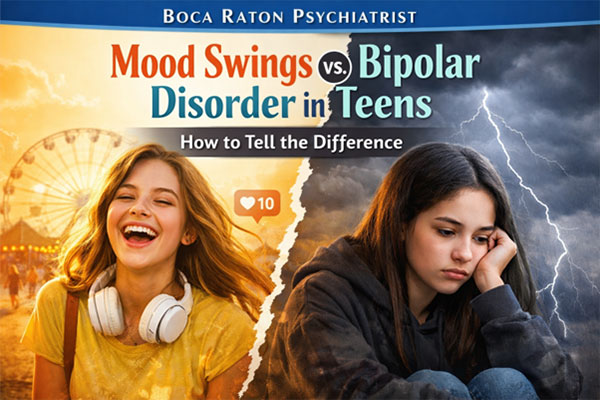
Adolescence is an emotional rollercoaster. Hormonal shifts, academic pressure, social challenges, and identity development can all lead to noticeable mood changes. But when do typical teenage mood swings cross the line into something more serious—like bipolar disorder?
Parents often ask whether their teen’s behavior is “just a phase” or a sign of a mental health condition. Understanding the difference is crucial, and consulting a qualified Boca Raton psychiatrist can provide clarity, early diagnosis, and effective treatment.
Understanding Normal Teen Mood Swings
Teen mood swings are common and developmentally appropriate. During adolescence:
- Hormones fluctuate rapidly
- The brain’s emotional center develops faster than the reasoning center
- Social relationships become more complex
- Academic expectations increase
Common characteristics of typical mood swings:
- Short-lived emotional reactions
- Mood shifts triggered by specific events
- Ability to return to baseline mood
- No major disruption in daily functioning
While these shifts may feel intense, they are usually temporary and manageable.
What Is Bipolar Disorder?
Bipolar disorder is a mental health condition characterized by extreme mood episodes that go beyond typical emotional ups and downs.
There are two main mood states:
- Mania or hypomania – elevated, irritable, or unusually energetic mood
- Depression – persistent sadness, hopelessness, loss of interest
These episodes are more intense, last longer, and significantly impair functioning at school, home, or socially.
Signs of Bipolar Disorder in Teens
Manic or Hypomanic Symptoms:
- Extremely high energy or decreased need for sleep
- Rapid speech or racing thoughts
- Inflated self-esteem or grandiosity
- Risky or impulsive behaviors
- Increased goal-directed activity
Depressive Symptoms:
- Persistent sadness or irritability
- Loss of interest in favorite activities
- Fatigue or changes in sleep patterns
- Feelings of worthlessness
- Thoughts of self-harm or suicide
Unlike typical mood swings, bipolar episodes last for days or weeks and are not always triggered by specific events.
Key Differences at a Glance
| Teen Mood Swings | Bipolar Disorder |
| Short-lived | Last days to weeks |
| Triggered by events | May occur without trigger |
| Mild to moderate intensity | Severe and disruptive |
| Functioning remains intact | Significant impairment |
| Part of normal development | Clinical mental health disorder |
If mood changes are persistent, extreme, or interfere with daily life, evaluation by a Boca Raton psychiatrist is recommended.
Why Early Diagnosis Matters
Early identification allows:
- Proper treatment planning
- Reduced risk of worsening symptoms
- Improved academic and social functioning
- Better long-term outcomes
Untreated bipolar disorder can lead to academic struggles, relationship difficulties, and increased risk of substance use or self-harm.
Treatment Options for Teens
Treatment typically includes:
- Medication management (mood stabilizers or other psychiatric medications)
- Psychotherapy, including cognitive behavioral therapy (CBT)
- Family education and support
- Lifestyle regulation (sleep hygiene, stress management)
A personalized approach is essential, as each teen’s symptoms and needs differ.
When to Seek Professional Help
Consider consulting a Boca Raton psychiatrist if your teen:
- Has extreme mood changes lasting several days
- Shows risky or reckless behavior
- Talks about hopelessness or self-harm
- Experiences severe sleep disturbances
- Has a family history of bipolar disorder
Early intervention can make a significant difference.
Frequently Asked Questions (FAQ)
1. Can bipolar disorder start in adolescence?
Yes. Bipolar disorder can begin in the teen years, although symptoms may initially be mistaken for typical moodiness.
2. Is irritability a sign of bipolar disorder?
In teens, mania may present as intense irritability rather than obvious euphoria.
3. How is bipolar disorder diagnosed?
A comprehensive psychiatric evaluation assesses symptom patterns, duration, family history, and functional impairment.
4. Can therapy alone treat bipolar disorder?
Therapy is important, but medication is often necessary to stabilize mood episodes effectively.
5. What if I’m unsure whether it’s serious?
If you’re concerned, it’s always best to schedule a professional evaluation for clarity and peace of mind.
About the Doctor
Dr. Priti Kothari is a trusted Boca Raton psychiatrist specializing in child and adolescent mental health. She provides comprehensive psychiatric evaluations, accurate diagnosis, and individualized treatment plans tailored to each teen’s needs.
With a compassionate and evidence-based approach, Dr. Kothari works closely with families to ensure adolescents receive the support they need to thrive emotionally, socially, and academically.
Final Thoughts
All teens experience emotional ups and downs—but when mood changes become extreme, prolonged, or disruptive, they may signal something more serious than typical adolescence.
If you’re concerned about your teen’s emotional well-being, consulting a qualified Boca Raton psychiatrist can help you understand what’s happening and guide you toward the right support and treatment.
References
- American Psychiatric Association. (2022). Diagnostic and Statistical Manual of Mental Disorders (5th ed., text rev.; DSM-5-TR). American Psychiatric Publishing.
- National Institute of Mental Health (NIMH). (2023). Bipolar Disorder in Children and Teens.
https://www.nimh.nih.gov/health/topics/bipolar-disorder - American Academy of Child & Adolescent Psychiatry (AACAP). (2022). Bipolar Disorder Resource Center.
https://www.aacap.org - Van Meter, A., Moreira, A. L., & Youngstrom, E. (2019). Updated meta-analysis of epidemiologic studies of pediatric bipolar disorder. Journal of Clinical Psychiatry, 80(3).
- Birmaher, B., & Axelson, D. (2006). Course and outcome of bipolar spectrum disorder in children and adolescents. Child and Adolescent Psychiatric Clinics of North America, 15(2), 355–373.*
- National Alliance on Mental Illness (NAMI). (2023). Bipolar Disorder in Children and Teens.
https://www.nami.org