
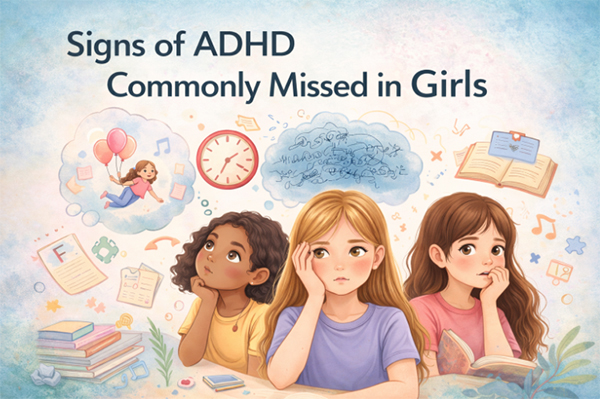
Attention-Deficit/Hyperactivity Disorder (ADHD) is often associated with hyperactive boys who struggle to sit still or follow rules. As a result, ADHD in girls is frequently overlooked, misdiagnosed, or diagnosed years later than it should be.
As a psychiatrist in Boca Raton, I regularly work with girls and women who were told they were “just anxious,” “too sensitive,” or “trying harder would fix it.” In reality, many of them had ADHD that went unrecognized—sometimes until adolescence or adulthood.
Understanding how ADHD presents differently in girls is critical for early support, emotional well-being, and long-term mental health.
Why ADHD Is Often Missed in Girls
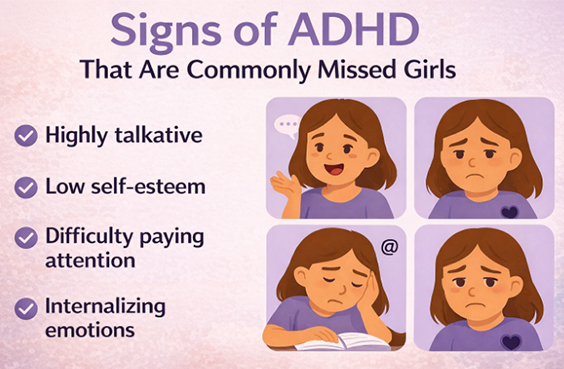
ADHD research and diagnostic criteria were historically based on male presentations. Boys are more likely to display externalized symptoms such as hyperactivity and impulsivity. Girls, on the other hand, often experience internalized symptoms that are quieter, subtler, and easier to overlook.
Girls with ADHD are also more likely to:
- Mask their symptoms to fit expectations
- Overcompensate academically
- Be labeled as “daydreamers” or “perfectionists”
- Develop anxiety or low self-esteem instead of disruptive behavior
This leads to delayed diagnosis and increased emotional distress.
Commonly Missed Signs of ADHD in Girls
1. Inattentiveness Without Hyperactivity
Many girls with ADHD are not physically hyperactive. Instead, they may:
- Appear “spacey” or lost in thought
- Struggle to follow instructions
- Have difficulty finishing tasks
- Forget assignments, chores, or conversations
Because they are quiet and compliant, these struggles often go unnoticed.
2. Emotional Sensitivity and Mood Swings
Girls with ADHD often experience intense emotions. This can look like:
- Frequent overwhelm
- Tearfulness over small frustrations
- Strong reactions to criticism
- Difficulty calming down after emotional events
These symptoms are frequently misdiagnosed as anxiety or mood disorders rather than ADHD.
3. Perfectionism and Overcompensating
Some girls cope by working excessively hard to hide their difficulties. They may:
- Spend hours on homework
- Fear making mistakes
- Appear “high-achieving” but feel constantly exhausted
- Experience burnout or anxiety
This masking can delay diagnosis for years.
4. Social Struggles That Are Subtle
Instead of disruptive behavior, girls with ADHD may:
- Struggle to keep up with conversations
- Miss social cues
- Feel chronically “out of place”
- Have difficulty maintaining friendships
These challenges can lead to isolation, low self-confidence, or people-pleasing behaviors.
5. Disorganization and Time Blindness
Girls with ADHD often struggle with:
- Managing time
- Keeping track of belongings
- Planning ahead
- Estimating how long tasks will take
These difficulties are often misinterpreted as laziness or lack of effort.
6. Anxiety or Depression as the First Diagnosis
Because ADHD in girls is frequently missed, many are first diagnosed with:
- Generalized anxiety
- Depression
- Adjustment disorders
While these conditions may coexist, untreated ADHD is often the underlying driver.
Why Early Identification Matters
When ADHD goes undiagnosed, girls are at higher risk for:
- Chronic anxiety and depression
- Low self-esteem
- Academic burnout
- Eating disorders
- Difficulty setting boundaries
- Adult ADHD with significant life impairment
Early evaluation by a qualified psychiatrist in Boca Raton can help girls understand their brains, build coping skills, and thrive emotionally and academically.
What Parents Can Do
If you notice persistent attention, emotional, or organizational challenges:
- Trust your instincts
- Look beyond grades alone
- Observe emotional patterns, not just behavior
- Seek a comprehensive psychiatric evaluation
ADHD is not a character flaw—it is a neurodevelopmental condition that responds well to proper support.
Frequently Asked Questions (FAQs)
Can girls really have ADHD without being hyperactive?
Yes. Many girls have inattentive-type ADHD, which does not include visible hyperactivity. This is one of the main reasons ADHD is missed in girls.
At what age should girls be evaluated for ADHD?
If symptoms are impacting emotional well-being, school performance, or daily functioning, evaluation can be appropriate at any age—even in early childhood.
Is ADHD in girls often mistaken for anxiety?
Very often. Emotional dysregulation and chronic overwhelm from untreated ADHD can look like anxiety. A thorough evaluation by a psychiatrist in Boca Raton helps differentiate the two.
Can a girl be successful in school and still have ADHD?
Absolutely. Many girls with ADHD perform well academically but struggle internally with stress, exhaustion, and emotional regulation.
How is ADHD treated in girls?
Treatment may include:
- Behavioral strategies
- School accommodations
- Therapy
- Medication when appropriate
Care is individualized based on the child’s needs.
When should I seek professional help?
If symptoms are persistent, worsening, or affecting your child’s confidence or mental health, it’s time to consult a qualified psychiatrist in Boca Raton.
Final Thought
ADHD in girls is real, common, and often misunderstood. Early recognition can change the trajectory of a child’s emotional health and self-belief.
If you suspect ADHD may be affecting your daughter, compassionate and evidence-based support is available. Dr. Priti Kothari, trusted psychiatrist in Boca Raton, provides comprehensive evaluations and personalized care for children and adolescents.
References
- Centers for Disease Control and Prevention (CDC)
ADHD in Children – Signs and Symptoms
https://www.cdc.gov/adhd/signs-symptoms/index.html - National Institute of Mental Health (NIMH)
Attention-Deficit/Hyperactivity Disorder in Children and Adolescents
https://www.nimh.nih.gov/health/topics/attention-deficit-hyperactivity-disorder-adhd - American Academy of Pediatrics (AAP)
Clinical Practice Guideline for ADHD
https://publications.aap.org/pediatrics/article/144/4/e20192528/38542 - American Psychological Association (APA)
Why ADHD Is Often Missed in Girls
https://www.apa.org/monitor/2022/03/adhd-girls - CHADD (Children and Adults with Attention-Deficit/Hyperactivity Disorder)
Understanding ADHD in Girls and Women
https://chadd.org/for-parents/understanding-adhd-in-girls-and-women/ - Harvard Medical School – Harvard Health Publishing
ADHD in Girls: Why It’s Often Missed
https://www.health.harvard.edu/blog/adhd-in-girls-why-its-often-missed-202302012873