
Social media is a central part of teenage life. Platforms like Instagram, TikTok, Snapchat, and YouTube shape how teens communicate, learn, and express themselves. While social media can offer meaningful connection and creativity, it also presents real mental health challenges. A Boca Raton adult psychiatrist often sees firsthand how social media use affects teen anxiety, depression, self-esteem, and emotional regulation.
Understanding both the risks and benefits of social media – and learning how to establish healthy boundaries – can help families support teen mental health in a balanced, informed way.
The Growing Impact of Social Media on Teen Mental Health
Teen brains are still developing, particularly areas responsible for impulse control, emotional regulation, and decision-making. Social media platforms are designed to capture attention, reward engagement, and encourage comparison, which can intensify emotional responses in adolescents.
Research has linked excessive or unregulated social media use to increased rates of anxiety, depression, sleep disturbance, and low self-esteem in teens. However, the relationship is not one-dimensional. The impact depends on how social media is used, how much time is spent online, and whether teens have strong offline support systems.
A Boca Raton adult psychiatrist evaluates these factors when assessing teen mental health concerns related to digital use.
Potential Risks of Social Media for Teens
Increased Anxiety and Depression
Constant exposure to curated images and highlight reels can create unrealistic expectations. Teens may feel pressure to appear perfect, popular, or successful, leading to feelings of inadequacy and chronic stress.
Social Comparison and Low Self-Esteem
Likes, comments, and follower counts can become measures of self-worth. Teens who compare themselves negatively to peers are more vulnerable to low self-esteem and depressive symptoms.
Cyberbullying and Online Harassment
Digital platforms can amplify bullying behaviors, making them persistent and difficult to escape. Cyberbullying has been linked to increased emotional distress, school avoidance, and suicidal ideation.
Sleep Disruption
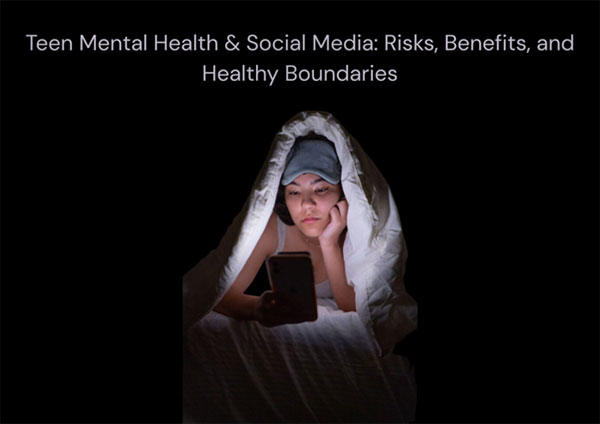
Late-night scrolling and constant notifications interfere with sleep patterns. Poor sleep significantly impacts mood, attention, and emotional resilience in adolescents.
The Benefits of Social Media When Used Appropriately
Despite its risks, social media is not inherently harmful. When used mindfully, it can support teen development in meaningful ways.
Social Connection and Support
For teens who feel isolated, social media can provide connection, especially for those with niche interests or marginalized identities.
Self-Expression and Creativity
Many teens use platforms to explore creativity through art, writing, music, and video, which can support emotional expression and confidence.
Access to Mental Health Resources
Educational content, peer support communities, and mental health advocacy can help teens feel understood and less alone.
A Boca Raton adult psychiatrist encourages families to recognize these benefits while still prioritizing healthy limits.
Recognizing When Social Media Is Affecting Mental Health
Parents and caregivers should watch for signs that social media use may be negatively impacting a teen’s emotional well-being, including:
- Increased irritability or mood swings
- Withdrawal from family or offline friends
- Declining academic performance
- Sleep problems or fatigue
- Increased anxiety when unable to access devices
- Loss of interest in previously enjoyed activities
When these patterns persist, a mental health evaluation may be helpful.

Setting Healthy Boundaries Around Social Media
Establishing boundaries is not about punishment – it’s about protection and balance.
Encourage Open Conversations
Teens are more likely to listen when they feel heard. Ask open-ended questions about what they enjoy online and what feels stressful.
Set Reasonable Limits
Time limits, device-free meals, and screen-free bedrooms support healthier routines without being overly restrictive.
Model Healthy Digital Behavior
Teens notice adult behavior. Modeling balanced technology use reinforces expectations.
Prioritize Offline Activities
Encouraging sports, hobbies, volunteering, and family time helps teens build identity beyond the screen.
A Boca Raton adult psychiatrist often works with families to develop individualized strategies that fit a teen’s emotional needs and developmental stage.
When to Seek Professional Support
If social media use contributes to persistent anxiety, depression, emotional outbursts, or behavioral changes, professional support may be beneficial. A psychiatric evaluation can help determine whether symptoms are related to social media stress, an underlying mental health condition, or a combination of factors.
Treatment may include therapy, skill-building strategies, parent guidance, and when appropriate, medication management. Early intervention can prevent symptoms from escalating and support healthier coping skills.
Supporting Teen Mental Health in Boca Raton
Teen mental health is complex, and social media is only one part of a larger picture. With the right guidance, teens can learn to navigate digital spaces safely while maintaining emotional balance and self-confidence.
Dr. Priti Kothari is a trusted Boca Raton adult psychiatrist with extensive experience supporting adolescents, young adults, and families facing anxiety, depression, mood disorders, ADHD, and behavioral concerns. Her approach emphasizes thorough evaluation, individualized treatment planning, and collaboration with families to support long-term emotional well-being. Through compassionate, evidence-based care, Dr. Kothari helps teens and parents establish healthier boundaries and build resilience in an increasingly digital world.
Medical & Research References
- Mayo Clinic – Teens and Social Media Use
Mayo Clinic
https://www.mayoclinic.org/healthy-lifestyle/tween-and-teen-health/in-depth/teens-and-social-media-use/art-20474437 - Pew Research Center – Teens, Social Media & Mental Health
Pew Research Center
https://www.pewresearch.org/internet/2025/04/22/teens-social-media-and-mental-health/ - American Academy of Child and Adolescent Psychiatry (AACAP) Policy Statement
AACAP
https://www.aacap.org/AACAP/Policy_Statements/2023/Social_Media_Youth_Mental_Health.aspx - U.S. Surgeon General Advisory – Social Media & Youth Mental Health
HHS
https://www.hhs.gov/surgeongeneral/reports-and-publications/youth-mental-health/social-media/index.html - American Academy of Pediatrics – Social Media and Youth Mental Health FAQ
AAP
https://www.aap.org/en/patient-care/media-and-children/center-of-excellence-on-social-media-and-youth-mental-health/social-media-and-youth-mental-health-what-teens-ask-what-research-says/