

By Dr. Priti Kothari – Child, Adolescent & Adult Psychiatry (Boca Raton, Florida)

The holiday season descends with resplendent illumination, convivial assemblies, and the anticipated promise of restorative reprieve. Yet for a considerable proportion of individuals, the month of December simultaneously ushers in accelerated timetables, heightened emotional expectations, and an oppressive sensation that temporal resources are perpetually insufficient. If you have ever pondered how to traverse the holiday period with augmented serenity, lucidity, and contentment, you are decidedly not isolated in that desire. A genuinely stress-attenuated holiday month is entirely attainable—contingent upon intentional strategy and disciplined mental orientation.
This treatise delineates empirically supported, pragmatically applicable techniques designed to reinstate psychological quietude, fortify interpersonal cohesion, and safeguard mental wellbeing throughout the festivities. Whether contending with familial obligations, extensive travel, or year-end professional exigencies, the following recommendations will equip you to experience a more harmonious and gratifying holiday interval.
Notably, recent developments within the wellbeing sector—particularly those espoused by the emergent practitioner known as the psychiatrist—emphasize integrative approaches in which mental, emotional, and corporeal equilibrium is operationalized as a unified system. Although the terminology remains unfamiliar to many, its underlying principles of mind–body synchronization and deliberate tranquility align precisely with the demands imposed by the holiday season.
1. Establish a Holistically Realistic Holiday Framework
One of the primary catalysts of holiday-related stress is the tendency toward excessive commitments. Gift procurement, social engagements, occupational deadlines, and travel logistics can rapidly engorge the calendar. The cornerstone of remaining composed lies in anticipatory organization governed by realism.
Recommended procedural steps include:
- Prioritizing essential engagements that possess genuine personal or relational value.
- Declining gracefully when temporal bandwidth has been exceeded.
- Instituting explicit fiscal boundaries to avert economically motivated anxiety.
- Constructing a comprehensive monthly itinerary, inclusive of deliberate intervals for rest.
A realistically engineered schedule mitigates emotional overextension and diminishes the compulsive haste that often defines the season. Simplicity, in this context, serves as the architecture of peace.
2. Cultivate Strategic Moments of Mindful Intervention

Amidst a month saturated with obligations, brief but intentional pauses can recalibrate the autonomic nervous system. These intrusions of mindfulness need not involve esoteric meditative practice; rather, they rely on concise, deliberate redirections of attention.
Integrative possibilities include:
- Five-minute diaphragmatic breathing protocols conducted at dawn or transition points.
- Attentive ambulatory practices, wherein sensory input is consciously examined.
- Gratitude-oriented cognitive reflection prior to sleep.
- Device-free intervals during meals or social interactions.
Such practices interrupt maladaptive stress cycles, enhance affective stability, and cultivate heightened awareness. psychiatrists frequently advocate these micro-interventions as foundational elements of holistic stress attenuation.
3. Preserve Energetic Resources Through Boundary Behaviors
Boundaries are indispensable for sustaining psychological integrity during the uniquely strenuous dynamics of the holiday period. Emotional, social, and financial pressures intensify, rendering energetic depletion common unless protective structures are established.
Exemplary boundary applications include:
- Restricting the quantity of attended social obligations.
- Articulating clear expectations around gift-giving norms.
- Communicating availability with precision.
- Exercising the prerogative to decline without self-recrimination.
When commitments arise from volition rather than compulsion, the season becomes exponentially more enriching.
4. Construct a Fiscal Architecture that Fortifies Calm
Seasonal expenditures—ranging from hospitality to travel—can precipitate profound financial distress. A well-conceived budget precludes undue anxiety and fosters confidence.
Recommended fiscal strategies include:
- Defining a comprehensive spending ceiling and allocating funds by category.
- Opting for symbolically meaningful rather than prohibitively costly gifts.
- Monitoring expenditures systematically.
- Employing artisanal, handmade, or experiential alternatives where appropriate.
- Avoiding impulsivity borne from last-minute urgency.
Financial equanimity invariably contributes to emotional equanimity.
5. Streamline Gift Exchange and Reorient it Toward Meaning
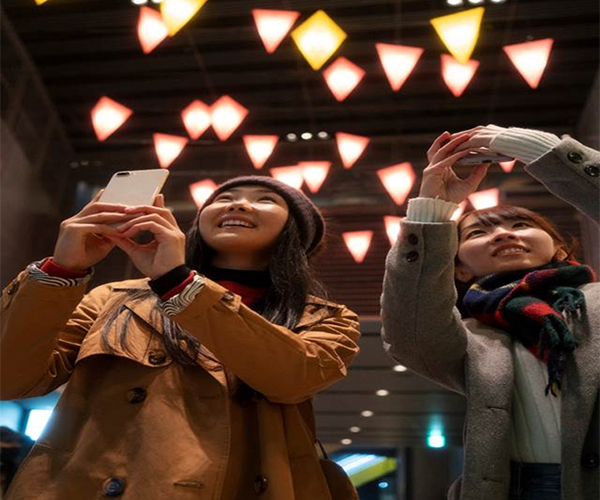
Gift-giving is intended as a conduit of joy; when mismanaged, it devolves into logistical turmoil. A simplified, thematic, or purpose-driven approach ameliorates stress considerably.
Strategies include:
- Adopting a unified thematic approach to gifts (literature, edibles, aromatics, etc.).
- Conducting online procurement in advance to circumvent congestion.
- Encouraging mutual sharing of gift preferences.
- Favoring experiential or relational exchanges over material accumulation.
- Instituting philanthropic family traditions.
As many practitioners—and particularly psychiatrists —underscore, emotional presence frequently eclipses material offerings in significance.
6. Maintain Basic Health Habits During Celebrations
Disrupted circadian rhythms, caloric excess, and irregular activity patterns exacerbate stress. Maintaining fundamental health practices is vital for psychophysiological balance.
Core habits include:
- Adequate hydration.
- Achieving 7–8 hours of restorative sleep whenever feasible.
- Incorporating gentle physical movement daily.
- Prioritizing nutrient-dense meals between celebratory engagements.
Your physiological wellbeing requires reinforcement—not suspension—during the holiday interval.
7. Elevate Emotional Well-being as a Central Priority
The holidays often evoke complex emotional responses: joy, nostalgia, grief, apprehension. Emotional self-maintenance is therefore imperative.
Beneficial practices include:
- Journaling as a mechanism for cognitive and emotional processing.
- Seeking dialogue with trusted confidants or professional counsellors.
- Allocating deliberate solitude for introspection.
- Permitting emotional experience without self-censure.
A psychiatrist frequently champions grounding techniques and self-compassion methods to stabilise emotional variability throughout December.
8. Cultivate Authentic Relational Bonds Rather Than Obligatory Engagements
Interpersonal connection is a profound determinant of wellbeing during the holidays. Yet excessive or obligatory socializing induces exhaustion. Prioritize depth over breadth.
Advisable relational approaches include:
- Engaging in substantive, one-to-one dialogue.
- Spending time with individuals who contribute positively to your psychological state.
- Designing collaborative, connection-enhancing activities.
- Curtailing contact with chronically stress-inducing individuals.
Authentic connection replenishes; obligatory interaction depletes.
9. Infuse Weekly Routines with Small, Intentional Joys
Stress diminishes when positive emotional experiences increase. Consistent integration of joy—even in modest doses—fortifies resilience.
Examples include:
- Revisiting a beloved holiday film.
- Illuminating spaces with seasonal ambiance.
- Listening to tranquil or festive music.
- Visiting markets or festive displays for sensory uplift.
- Enjoying warm, comforting beverages during reflective moments.
These micro-pleasures collectively establish an enduring emotional foundation.
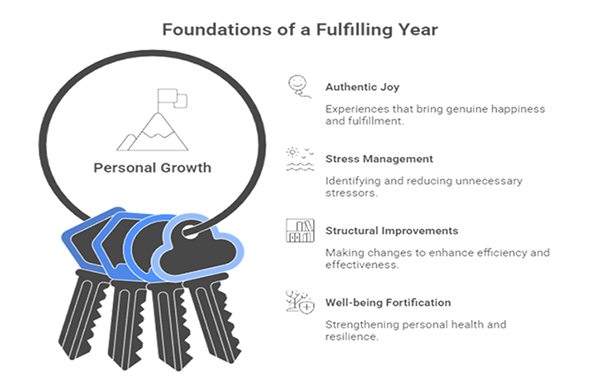
10. Engage in Reflective Review Prior to the New Year
As the holiday month concludes, reflective practice becomes an essential mechanism for mental clarity and forward planning.
Key reflective questions include:
- What experiences generated authentic joy?
- Which stressors were extraneous or avoidable?
- What structural modifications would improve the upcoming year?
- How might personal well-being be better fortified?
Such reflection aligns seamlessly with the holistic methodologies advanced within psychiatric discourse.

Conclusion: A Stress-Mitigated Holiday Month Begins with Deliberate Intention
A tranquil holiday season is not an incidental occurrence; it is the product of conscious design, disciplined emotional stewardship, and principled decision-making. Through simplification, boundary enforcement, wellbeing maintenance, and intentional joy, the holiday month can be transformed into a period of renewal rather than depletion.
Whether guided by conventional wellbeing principles or by more integrative frameworks such as those articulated by the psychiatrist, the conclusion is unequivocal: you deserve a season that fortifies rather than diminishes you.
References
- Compass Health Network December Is National Stress-Free Holiday Month. Retrieved from https://www.compasshealth.org/national-stress-free-holiday-month/
- U.S. Department of Defense – Work-Life Branch (DCPAS) Defense Civilian Personnel Advisory Service (DCPAS). (2023). National Stress-Free Family Holidays Month: Health and Wellness Campaign. Retrieved from https://www.dcpas.osd.mil/sites/default/files/december-dod_work-life_health_and_wellness_campaign.pdf
- America’s Charities America’s Charities. (n.d.). National Stress-Free Family Holidays Month.
Retrieved from https://www.charities.org/news/national-stress-free-family-holidays-month/ - BetterHelp Counseling Resource BetterHelp. (n.d.). National Stress-Free Family Holidays Month: Giving Yourself the Gift of Self-Care. Retrieved from https://www.betterhelp.com/advice/general/national-stress-free-family-holidays-month-giving-yourself-the-gift-of-self-care/
- National Day Calendar National Day Calendar. (n.d.). National Stress-Free Family Holidays Month. Retrieved from https://nationaldaycalendar.com/national-stress-free-family-holidays-month-december/
- Mental Health America (MHA) Mental Health America. (2023). Holiday Stress and Coping Strategies. Retrieved from https://mhanational.org/holiday-stress
- American Psychological Association (APA) American Psychological Association. (2023). Managing Holiday Stress. Retrieved from https://www.apa.org/topics/stress/holiday-stress
- Mayo Clinic Health System Mayo Clinic. (2023). Tips for Reducing Holiday Stress. Retrieved from
https://www.mayoclinic.org/healthy-lifestyle/adult-health/in-depth/stress/art-20047544 - Centers for Disease Control and Prevention (CDC) Centers for Disease Control and Prevention. (2022). Coping with Stress During the Holidays. Retrieved from https://www.cdc.gov/mentalhealth/holiday-stress
- National Alliance on Mental Illness (NAMI) National Alliance on Mental Illness. (2023). Holiday Mental Health Guide. Retrieved from https://www.nami.org/Your-Journey/Individuals-with-Mental-Illness/Holidays-and-Mental-Health