
Individuals with tic disorders experience tics, sudden and uncontrolled movements or vocalizations which typically emerge before adolescence. While the three tic disorders Transient Tic Disorder, Chronic Tic Disorder, and Tourette Syndrome are affected by genetics and neurological factors, our understanding of the underlying biological mechanisms remains limited. A recent meta-analysis of 50 studies, involving 1,566 participants, evaluated the efficacy of placebo response in Tourette syndrome. It found that individuals exposed to treatment by placebo “experienced considerable improvement,” and that other factors may have increased placebo response, a result generally associated with larger responses from medication (Ferreira de Barros and Farhat et al, 2025). These findings are important for clinical researchers, who aim to conduct further pharmacological studies to advance treatment in Tourette’s Disorder, as knowledge about tic disorders develops.
Tics and Tourette’s Syndrome
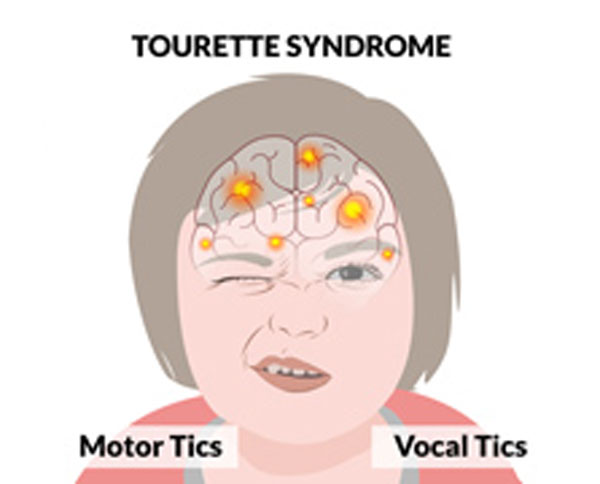
Tics can be classified into motor or vocal movements and may be simple or complex. In general, simple tics are more common in Tourette’s than complex tics, which are more distinct and encompass several muscle groups in the body. Examples of simple motor tics include eye blinking, shoulder shrugging, or facial grimacing. Complex motor tics may be hopping, jumping, bending, or other movements that require muscles across the body. Vocal tics are involuntary sounds. Simple vocal tics include grunting and repetitive throat clearing. Complex vocal tics include repeating one’s own words or phrases, or the more commonly associated swearing. Tics can be triggered by excitement or anxiety and may improve with calming techniques, which is a non-medicated way to manage tics and minimize their outside disturbance.
Diagnosing Tic Disorders usually begins with identifying the presence of tics. For a doctor to diagnose Tourette’s Syndrome, he or she will ask for unusual behaviors that have been noticed. Tourette’s requires the presence of both motor and vocal tics, and some tics may be repetitive or commonly occurring.
Placebo Response in Other Conditions
Other research into psychiatric disorders make use of placebos and study their corresponding response. The meta-analysis conducted by Ferreira de Barros, Farhat, et al, notes that the impact of placebos on the Autism Spectrum, referred to as Autism Spectrum Disorder (ASD), often has a smaller response in individuals than Tourette’s. However, in conditions such as ADHD, pediatric anxiety disorders, and pediatric depression, individuals respond greater to placebos. These findings warrant further examination that may provide valuable insight on treatment: the use of placebos and medication as well.
Conclusion
Research continues to establish knowledge of adolescent psychiatric disorders, how the medical community can provide information on such conditions, and recommend reasonable treatment, and how to make use of placebos and improve their potential impact. New analysis can provide insight on this process. Indeed, a recent meta-analysis found strong responses to placebos and a positive correlation between placebo response and response to medication. The study, which aimed to provide a greater overview of the efficacy of placebo response in Tourette’s Disorder, serves as key to conduct further research which may advance treatment. Finally, understanding tics is essential to manage the three tic disorders-Transient Tic Disorder, Chronic Tic Disorder, and Tourette’s-as research informs on each other, like the analysis of placebo responses compared across adolescent psychiatric disorders.
References
Ferreira de Barros, Farhat, et. al. Systematic Review and Meta-Analysis: Placebo Response in Randomized Controlled Trials of Tourette’s Disorder Medications. Journal of the American Academy of Child and Adolescent Psychiatry. 2025;64(5): 577-592.
National Institute of Neurological Disorders and Stroke [NINDS scientists, other experts, et al.]. Tourette Syndrome. https://www.ninds.nih.gov/health-information/disorders/tourette-syndrome#toc-what-is-tourette-syndrome-