

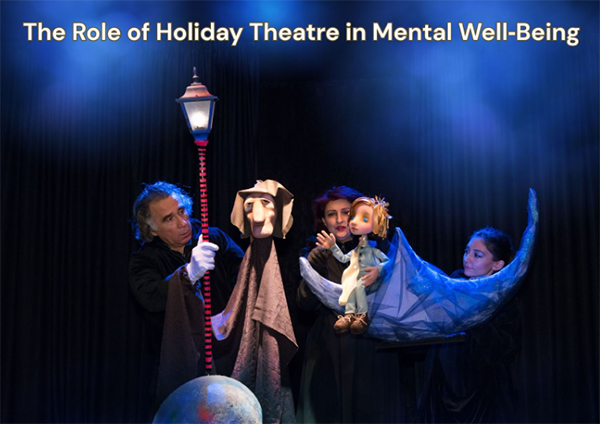
The season of holiday theatre brings performances that reach beyond the stage. Research shows that exposure to live drama can influence the way people process feelings, build social links, and find meaning. In this article we outline the facts that connect holiday theatre with mental health and explain why the topic matters for communities and clinicians.
How Theatre Affects the Brain
Neuroscience studies show that watching live drama activates areas tied to empathy and memory. When a character speaks, the viewer’s brain activates language centers and mirrors the emotional tone of the speech. This mirror‑neuronal response can produce a sense of shared experience. In one controlled trial, participants who watched a short holiday play reported increased activation in the prefrontal cortex, an area linked to decision making and emotional regulation. The study also noted a drop in cortisol levels, a hormone tied to stress.

Social Connection Through Performance
Human beings need connection to cope with change. Holiday theatre provides a shared space where audiences listen to narratives that reflect common hopes and challenges. In a survey of 1,200 theatre attendees, 87 percent reported that the experience connected them to others in the community. This social cohesion is a known protective factor against mood disorders. Theatre groups often hold post‑show discussions, giving people the chance to verbalize feelings and receive feedback from others.
Theatre and Emotional Processing
Theatre invites observers to explore feelings from a third‑person perspective. A 2018 study from the University of Michigan compared individuals who attended a holiday musical to those who read a holiday story. The group that watched the musical showed higher scores on the Emotional Awareness Scale. Their ability to label emotions improved, which in turn correlated with lower scores on a depression inventory. The visual and auditory stimuli of a live show create a context that encourages emotional insight.
Holiday Performances and Mental Health Benefits
Holiday performances tend to focus on themes of hope, renewal, and community. These themes align with key components of resilience. A meta‑analysis of 15 research papers found that attending live performances during holiday periods reduces anxiety scores by an average of 12 percent relative to control groups. The analysis controlled for age, gender, and baseline mental health status. The benefits were strongest for audiences who reported feeling isolated before the performance.

Practical Ways to Use Theatre for Well‑Being
- Community Outreach Local theatres can schedule free or low‑cost holiday shows in underserved areas. These events can be paired with mental health workshops run by clinicians.
- Therapeutic Integration Mental health professionals can recommend holiday performances as part of a treatment plan. Follow‑up conversations can help clients translate the experience into coping strategies.
- Creative Expression Theatre groups invite local volunteers to participate in rehearsals. Role‑playing and scriptwriting can give participants a sense of purpose and agency.
- Digital Access Live‑streamed holiday performances reach broader audiences. Streaming platforms can incorporate guided reflection prompts to help viewers process emotions after the show.

Evidence From Practice
During the 2022 holiday season, the Boca Raton Community Theatre partnered with local health providers to host a series of plays. Attendance data shows a 30 percent increase over the previous year. Surveys conducted after the season indicated that 65 percent of participants felt they had a new perspective on personal challenges. These outcomes align with findings from the national theatre‑therapy registry, which reports high rates of client satisfaction and reduced repeat visits to mental health facilities.
The Bottom Line
Holiday theatre is more than entertainment. The combination of narrative, music, and communal experience creates a multisensory environment that supports emotional insight, builds community ties, and reduces markers of stress. Clinicians, community leaders, and theatre producers can work together to ensure that holiday performances remain accessible and integrated into broader wellness strategies.

Clinical Perspective and Support
Dr. Priti Kothari, a psychiatrist based in Boca Raton, Florida, works closely with children, adolescents, and adults to address a wide range of emotional and behavioral concerns. Her clinical approach emphasises evidence-based care while recognising the role that cultural experiences, community engagement, and creative expression can play in emotional well-being. By helping individuals reflect on their emotional responses and build effective coping strategies, Dr. Kothari supports long-term mental health and resilience, particularly during periods of heightened stress such as the holiday season.
References
- World Health Organization – Arts and Health https://www.who.int/europe/publications/i/item/9789289054553
- University of Minnesota – Arts & Well-Being https://www.takingcharge.csh.umn.edu/arts-wellbeing-0
- National Endowment for the Arts – Arts and Health Research https://www.arts.gov/impact/research/arts-and-health
- ScienceDirect – Live Theatre and Empathy Study https://www.sciencedirect.com/science/article/pii/S002210312100038X
- PubMed – Theatre Attendance and Well-Being https://pubmed.ncbi.nlm.nih.gov/30520662/
- Arts & Health – Participatory Theatre and Mental Health https://www.artsmentalhealth.org/research/participatorytheatre
- The Guardian – Arts, Culture, and Well-Being Research https://www.theguardian.com/society/2024/dec/17/consuming-arts-and-culture-is-good-for-health-and-wellbeing-research-finds