
By Dr. Priti Kothari – Child, Adolescent & Adult Psychiatry (Boca Raton, Florida)
Bringing a new baby into the world is often described as one of the most joyful experiences in life. Yet for many women, the postpartum period can bring overwhelming emotional challenges. Postpartum depression (PPD) is a serious but highly treatable mental health condition that affects countless new mothers each year. Even though PPD is common, it often goes undiscussed due to stigma, misconceptions, or the pressure for motherhood to feel “perfect.”
What Is Postpartum Depression?
Postpartum depression is a type of mood disorder that occurs after childbirth. It is more intense and long-lasting than the “baby blues,” which typically involve mild mood swings, irritability, and sadness during the first few days after birth. Unlike baby blues, which usually resolve within two weeks, postpartum depression can last months or even longer if untreated.
This condition can affect new mothers, partners, and even adoptive parents, though it is most common in women who have recently given birth. Understanding postpartum depression is essential for early detection and effective recovery.
Signs and Symptoms of Postpartum Depression
Recognizing the signs of postpartum depression early can make a tremendous difference. Some common symptoms of postpartum depression include:
Signs and Symptoms of Postpartum Depression
Recognizing the signs of postpartum depression early can make a tremendous difference. Some common symptoms of postpartum depression include:
- Persistent sadness or hopelessness
A new mother may feel overwhelming sadness that doesn’t seem to go away, even when things appear to be going well on the surface.
- Loss of interest in activities
Things that once brought joy—hobbies, socializing, or bonding with the baby—may suddenly feel exhausting or unimportant.
- Sleep difficulties
Insomnia or excessive sleeping can occur, even when the baby is resting.
- Changes in appetite
Some mothers may lose their appetite completely, while others may turn to food for comfort.
- Irritability or anger
Postpartum rage, a lesser-known symptom, can cause sudden bursts of anger or frustration.
- Difficulty bonding with the baby
Mothers may feel emotionally disconnected or guilty for not feeling the “instant love” they expected.
- Anxiety or panic attacks
Intense worry, racing thoughts, or physical symptoms like a rapid heartbeat are common.
- Thoughts of self-harm
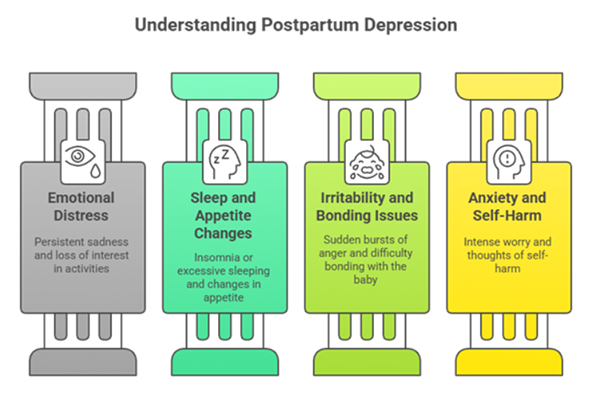
In severe cases, postpartum depression can involve thoughts of self-harm or harming the baby. In such cases, immediate professional help is crucial.
If you or someone you know is experiencing these symptoms, seeking support from a healthcare professional can lead to effective and compassionate treatment.
What Causes Postpartum Depression?
There is no single cause of postpartum depression. Instead, a combination of physical, emotional, and environmental factors can contribute.
Hormonal changes
After childbirth, the body undergoes a rapid drop in estrogen and progesterone levels. These hormonal fluctuations can trigger emotional instability and depression.
Physical exhaustion
Labor, delivery, and caring for a newborn can leave mothers physically drained, increasing vulnerability to postpartum depression.
Emotional stress
Adjusting to motherhood, lack of sleep, breastfeeding challenges, or having little support can elevate stress levels.
History of mental health conditions
Women with a previous history of depression, anxiety, or trauma are at a higher risk.
Lack of social support
Having limited help from family or friends can intensify feelings of isolation.
Challenging birth experience
Complications during pregnancy or childbirth can contribute to emotional distress.
Understanding these risk factors can help in early detection and effective treatment.
How to Diagnose Postpartum Depression
A healthcare provider—such as an OB-GYN, midwife, or mental health professional—can diagnose postpartum depression using questionnaires, symptom assessments, and conversations about emotional well-being. Early evaluation allows mothers to receive the right support before symptoms worsen.
If you’re concerned about symptoms, seeking help is a sign of strength, not failure.
Effective Treatments for Postpartum Depression
The good news is that postpartum depression is highly treatable. Depending on the severity, a doctor might recommend:
- Therapy
Cognitive Behavioral Therapy (CBT) and talk therapy are proven to help new mothers understand and manage their thoughts and emotions.
- Support groups
Connecting with other mothers experiencing similar challenges can help reduce isolation and build emotional resilience.
- Medication
Antidepressants may be prescribed when appropriate. Many options are safe for breastfeeding mothers, and decisions should be made with medical guidance.
- Lifestyle changes
Regular sleep, gentle exercise, and a balanced diet can support mental emotional well-being.
- Partner and family support
Loved ones can assist with chores, baby care, and emotional reassurance. A strong support system is essential for healing.
The Importance of Addressing Postpartum Depression Early
Ignoring symptoms of postpartum depression can lead to long-term mental health challenges, difficulty bonding with the baby, and strain on relationships. Early intervention leads to better recovery and strengthens the maternal-child bond.
The sooner a mother feels supported, the sooner she can begin healing.
How Partners and Families Can Help
Support from loved ones plays a crucial role in postpartum recovery. Here’s how partners and families can help:
- Listen without judgment
- Offer practical help with household responsibilities
- Encourage professional support when needed
- Provide emotional encouragement and reassurance
- Avoid dismissive comments like “You’re just tired” or “This is normal”
Small acts of kindness can make a world of difference to a new mother.
Breaking the Stigma Around Postpartum Depression
One of the biggest obstacles to healing is the misconception that “good mothers don’t feel depressed.” Postpartum depression does not reflect a mother’s abilities, love, or worth. It is a medical condition—just like any other—and deserves compassionate, evidence-based treatment.
Final Thoughts
Postpartum depression is a deeply challenging experience, but it is also one that new mothers can overcome with the right support, treatment, and understanding. If you or someone you know is struggling, remember that seeking help is a brave and powerful step. Healing is possible, and no one should face postpartum depression alone.
If you’re experiencing signs of postpartum depression, remember that effective help is available and recovery is absolutely possible. Early support can make a life-changing difference for both you and your baby. To learn more about treatment options, mental health support, and compassionate care tailored to your needs, visit Dr. Priti Kothari’s website. Take the first step toward feeling better today.
References
- Mayo Clinic — Postpartum depression: Symptoms and causes (Mayo Clinic)
https://www.mayoclinic.org/diseases-conditions/postpartum-depression/symptoms-causes/syc-20376617 - National Institute of Mental Health (NIMH) — Perinatal Depression fact sheet (includes postpartum depression) (National Institute of Mental Health)
https://www.nimh.nih.gov/health/publications/perinatal-depression - Centers for Disease Control and Prevention (CDC) — Symptoms of Depression Among Women (includes postpartum depression) (CDC)
https://www.cdc.gov/reproductive-health/depression/index.html - American College of Obstetricians and Gynecologists (ACOG) — FAQ on postpartum depression (ACOG)
https://www.acog.org/womens-health/faqs/postpartum-depression - MSD Manual — Professional reference: Postpartum depression — Gynecology and Obstetrics (MSD Manuals)
https://www.msdmanuals.com/en-in/professional/gynecology-and-obstetrics/postpartum-care-and-associated-disorders/postpartum-depression - Annual Reviews — O’Hara & McCabe (2013): Postpartum Depression: Current Status and Future Directions (a comprehensive academic review) (Annual Reviews)
https://www.annualreviews.org/doi/10.1146/annurev-clinpsy-050212-185612 - Britannica — Article: Postpartum depression (overview of symptoms, risk factors, and implications) (Encyclopedia Britannica)
https://www.britannica.com/science/postpartum-depression