
Most people think of insomnia as something that happens because of stress, anxiety, depression, or a hectic lifestyle. While that is often true, insomnia is not always just a symptom of another condition. In many cases, insomnia itself is the primary disorder — a condition that deserves its own diagnosis and treatment.
Understanding this distinction is crucial, because untreated primary insomnia can significantly affect mental health, physical well-being, and overall quality of life.
As a trusted psychiatrist in Boca Raton, Dr. Priti Kothari frequently works with individuals who have struggled with sleep issues for years, often without realizing that insomnia itself may be the core problem.
What Does It Mean When Insomnia Is a Primary Disorder?
Primary insomnia — now commonly referred to as chronic insomnia disorder — occurs when sleep difficulties are not directly caused by another medical, psychiatric, or substance-related condition.
To meet diagnostic criteria, symptoms typically include:
- Difficulty falling asleep
- Difficulty staying asleep
- Waking up too early and being unable to return to sleep
- Poor sleep quality despite adequate opportunity for sleep
These symptoms must occur at least three nights per week for three months or longer and cause daytime distress or impairment, such as fatigue, irritability, difficulty concentrating, or mood changes.
Unlike secondary insomnia, treating the underlying issue alone does not fully resolve the sleep disturbance.
Why Primary Insomnia Is Often Overlooked
Primary insomnia is frequently misunderstood or minimized. Many individuals are told:
- “It’s just stress.”
- “It will resolve on its own.”
- “Try melatonin or sleep earlier.”
While lifestyle adjustments can help, chronic insomnia often involves changes in brain arousal systems, heightened nighttime alertness, and learned sleep-related anxiety. Over time, the brain begins to associate the bed with wakefulness rather than rest.
Without proper evaluation, people may struggle for years, cycling through exhaustion, frustration, and worsening mental health.
How Primary Insomnia Affects Mental Health
When insomnia persists, it does more than disrupt sleep — it affects nearly every aspect of functioning.
Chronic insomnia is associated with:
- Increased risk of anxiety and depression
- Difficulty with focus, memory, and decision-making
- Emotional reactivity and irritability
- Reduced stress tolerance
- Lower quality of life
In some cases, insomnia precedes the onset of mood or anxiety disorders, rather than resulting from them. This is why early identification and targeted treatment are essential.
How a Psychiatrist Evaluates Primary Insomnia
A comprehensive evaluation by a psychiatrist in Boca Raton includes:
- Detailed sleep history (onset, duration, patterns)
- Review of medical and psychiatric history
- Assessment of medications and substances
- Evaluation of stressors, routines, and sleep behaviors
- Screening for mood, anxiety, or trauma-related conditions
This thorough approach helps determine whether insomnia is primary or secondary and guides an individualized treatment plan.
Evidence-Based Treatment for Primary Insomnia
Primary insomnia is highly treatable when addressed appropriately.
Cognitive Behavioral Therapy for Insomnia (CBT-I)
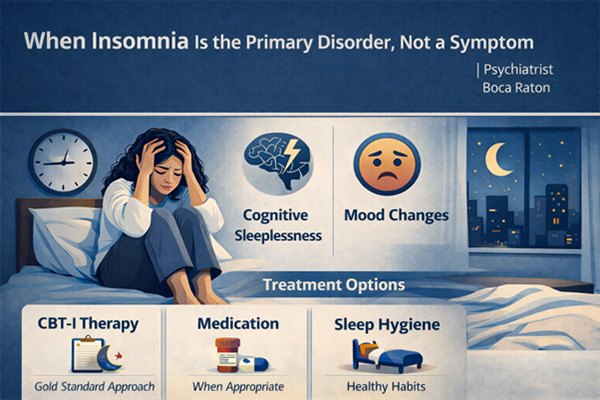
CBT-I is considered the gold standard treatment. It focuses on:
- Rebuilding healthy sleep associations
- Reducing sleep-related anxiety
- Improving sleep efficiency
- Establishing consistent circadian rhythms
CBT-I has been shown to provide long-term benefits without the risks associated with chronic medication use.
Medication (When Appropriate)
In some cases, short-term or carefully selected sleep medications may be used as part of a broader treatment plan. A psychiatrist evaluates risks, benefits, and individual needs before prescribing.
Lifestyle and Behavioral Support
Treatment often includes guidance on:
- Sleep timing and consistency
- Light exposure and screen use
- Caffeine and alcohol habits
- Stress regulation techniques
Why Treating Insomnia Early Matters
Untreated primary insomnia can become self-perpetuating. The longer it persists, the more deeply ingrained the sleep disruption becomes.
Early treatment can:
- Prevent worsening mental health symptoms
- Improve daily functioning and mood
- Reduce reliance on sleep aids
- Restore confidence in sleep
With professional care, many individuals experience meaningful and lasting improvement.
Frequently Asked Questions (FAQs)
Is insomnia a mental illness?
Insomnia is classified as a sleep-wake disorder. While it often overlaps with mental health conditions, it can exist independently.
Can insomnia exist without anxiety or depression?
Yes. Primary insomnia occurs even when no other psychiatric condition is present.
How long does insomnia need to last to be considered chronic?
Symptoms must occur at least three nights per week for three months or longer.
Is medication the only solution for insomnia?
No. Behavioral therapies like CBT-I are often more effective long term and are considered first-line treatment.
Can a psychiatrist help with sleep problems?
Yes. A psychiatrist is trained to evaluate both sleep disorders and overlapping mental health conditions, ensuring comprehensive care.
About Dr. Priti Kothari
Dr. Priti Kothari is a board-certified child, adolescent, and adult psychiatrist in Boca Raton who provides compassionate, evidence-based care for individuals experiencing sleep disorders, anxiety, depression, ADHD, and other mental health concerns. Her approach emphasizes careful evaluation, individualized treatment planning, and long-term well-being. Dr. Kothari works closely with patients and families to address both the biological and psychological factors that impact mental health and sleep.
References
- American Academy of Sleep Medicine (AASM)
International Classification of Sleep Disorders – Third Edition (ICSD-3)
https://aasm.org/clinical-resources/international-classification-of-sleep-disorders/ - National Institutes of Health (NIH) – MedlinePlus
Insomnia
https://medlineplus.gov/insomnia.html - American Psychiatric Association (APA)
DSM-5-TR: Sleep-Wake Disorders
https://www.psychiatry.org/psychiatrists/practice/dsm - National Sleep Foundation
What Is Chronic Insomnia?
https://www.thensf.org/what-is-insomnia/ - Harvard Medical School – Division of Sleep Medicine
Cognitive Behavioral Therapy for Insomnia (CBT-I)
https://healthysleep.med.harvard.edu/healthy/treating-insomnia/therapy/cognitive-behavioral-therapy - UpToDate (Patient Education)
Chronic insomnia disorder in adults
https://www.uptodate.com/contents/chronic-insomnia-disorder-in-adults-beyond-the-basics