
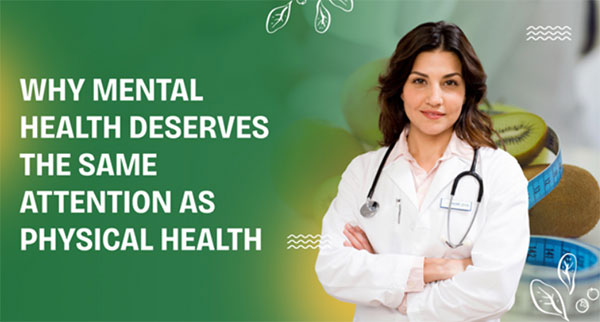
Mental health is not optional. It defines how we live, think, and connect. Yet, society still treats it receives the Same Attention as Physical health as secondary. Physical fitness gets praise. But emotional balance often goes into silence. It’s time to change that mindset.
When you care for your mind, your life transforms. You feel lighter. You think clearly. You act with purpose. Your emotions stop ruling you. Instead, you guide them. Mental health deserves the same care we give to the body — and here’s why.
The Hidden Connection Between Mind and Body
Your brain controls every body function. When it struggles, the rest follows. Stress increases blood pressure. Anxiety disrupts sleep. Depression kills appetite. Emotions are not “just in your head.” They are physical responses. Mental disorders were one of the top 10 causes of health-loss worldwide in 2021, accounting for about 17% of years lived with disability (YLDs) .
Doctors often treat symptoms. They prescribe pills. But few ask what’s behind those symptoms. Sometimes, it’s not your body that’s sick. It’s your thoughts, your grief, your burnout. When we ignore mental strain, it grows quietly. Then it bursts into full physical illness.
Emotional Pain Hurts Like Physical Pain
Brain scans show that emotional pain lights up the same regions as physical pain. The hurt of rejection feels like a wound. The ache of loss feels like being cut. So, emotional pain is not invisible. It’s real.
Still, we hide it. We tell ourselves to “move on.” We avoid therapy. We think tears mean weakness. That’s wrong. Emotional wounds need care, just like physical injuries. Without help, they fester.
Healing starts with awareness. You wouldn’t ignore a broken arm. Don’t ignore a broken heart.
Why We Still Stigmatize Mental Health
Society loves physical strength. We admire endurance and muscles. But we label vulnerability as weakness. People fear judgment. So, they stay quiet.
Stigma is deadly. It keeps people from seeking help. They bottle up emotions until it’s too late. Suicide, addiction, and breakdowns often start with silence.
Breaking the stigma needs action. Talk openly. Share your story. Normalize therapy. Speak about your struggles like you would about a cold or flu. Every conversation helps someone feel less alone.
The Cost of Ignoring Mental Health
Poor mental health costs billions each year. It reduces productivity. It damages families. It hurts communities. But money isn’t the main loss. Lives are.
When mental health declines, everything else follows. Relationships break. Work suffers. Dreams fade. Happiness disappears. Poor mental health costs the global economy about US$1 trillion annually in lost productivity, especially due to depression and anxiety.
Neglecting mental health is like driving with a flat tire. You might keep moving, but not for long. Sooner or later, everything stops.
7 Ways to Strengthen Your Mental Health Today
- Sleep deeply.Rest restores your brain.
- Eat smart.Food fuels emotions.
- Move daily.Exercise releases stress.
- Talk often.Don’t isolate yourself.
- Too much screen time drains focus.
- Practice gratitude.It rewires your brain for joy.
- Seek help.Therapy is strength, not weakness.
Simple actions change everything. Start small. Stay consistent. Watch your mind grow stronger.
How to Spot Hidden Mental Struggles Early
Many people smile while suffering. They mask pain with jokes. They say, “I’m fine,” while falling apart inside.
Here are early signs you shouldn’t ignore:
- Sudden mood swings.
- Constant fatigue.
- Loss of interest in fun things.
- Changes in sleep or appetite.
- Overthinking or hopelessness.
Spotting these signs early saves lives. If you notice them, act. Talk. Listen. Support.
Your small check-in could change someone’s world.
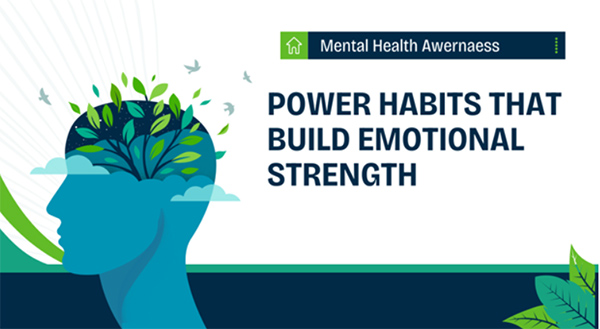
Power Habits That Build Emotional Strength
Habits shape mental health. Tiny daily acts make the difference between thriving and struggling.
Try these power habits:
- Journal your thoughts daily.
- Meditate for five minutes.
- Set boundaries. Say “no” without guilt.
- Celebrate small wins.
- Connect with nature.
These habits build resilience. They train your brain to stay calm. Over time, they create balance and joy.
How Workplaces Can Protect Mental Health
Companies focus on performance. They chase results. But burnout kills creativity. Stress destroys innovation.
Healthy employees produce better results. So, employers must care about minds, not just metrics.
Simple changes help:
- Offer flexible schedules.
- Create safe spaces for open talks.
- Encourage breaks.
- Train leaders to notice distress.
When mental health thrives, productivity follows naturally. A happy mind builds strong results.
Why Mental Fitness Equals Real Success
Success means nothing if you’re empty inside. Wealth and status can’t replace peace. True success includes emotional well-being.
Athletes train their bodies. Leaders must train their minds. Discipline, focus, and balance come from mental strength.
So, invest in your emotional fitness. Read, reflect, recharge. Protect your peace like a priceless asset. Because it is.
Emotionally Triggered Truth: Healing Starts Within
You can’t pour from an empty cup. Healing begins when you stop running. Feel your pain. Face it. Accept it. Then release it.
Suppressed emotions always return louder. Healing is not weakness. It’s courage. Every tear is progress.
When you heal inside, your world outside changes too. You glow differently. You attract peace. You move with purpose.
The Science of a Healthy Mind
Research proves that mental health affects lifespan. Chronic stress weakens immunity. Depression raises heart disease risk. Anxiety triggers inflammation.
Good mental health does the opposite. It strengthens immunity. It improves sleep. It boosts brain function.
So, treating the mind isn’t a luxury — it’s biology. Science supports what the heart already knows: emotional care saves lives.
Power Words for Self-Care and Recovery
Use words that heal. Speak kindly to yourself. Replace “I can’t” with “I’ll try.” Replace “I failed” with “I learned.”
Language shapes mindset. Empowering words shift emotions. They remind you of strength.
Say these often:
- “I am enough.”
- “I deserve peace.”
- “I will heal.”
- “I am growing.”
Your words become your reality. Choose them wisely.
When to See a Specialist
The earlier, the better. If you notice persistent anxiety, confusion, or behavioral indifference, consult a specialist immediately and without a delay
Clinics like Dr. Priti Kothari, Child Psychiatrist, Florida, and ADHD Consultant, Florida, focus on mental wellness and memory health. They offer early testing, counseling, and care.
Seeking help early improves outcomes and quality of life. Asking for support is a sign of strength.
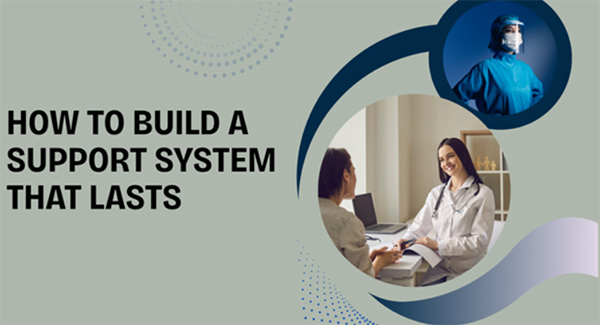
How to Build a Support System That Lasts
Healing isn’t a solo journey. Everyone needs a tribe. Surround yourself with people who uplift you.
Here’s how to build one:
- Reach out first.
- Listen without judgment.
- Check in regularly.
- Offer help before it’s asked.
Healthy relationships act as emotional shields. They protect you during storms. They remind you that you matter.
Why Society Must Treat Minds and Bodies Equally
Imagine if we treated mental illness like a broken leg. No shame. No whispers. Just help. That’s the world we need.
Health isn’t split. The mind and body are one system. Ignoring one hurts both. When we value mental care equally, society becomes stronger.
A nation with mentally healthy citizens is unstoppable.
How to Normalize Therapy Without Fear
Therapy is not just for “crazy” people. It’s for everyone with feelings, which means everyone.
Therapists guide, not judge. They help you unpack emotions. They teach coping tools. They give clarity when life feels foggy.
Going to therapy doesn’t mean you’re weak. It means you’re wise enough to grow. Let’s make therapy as normal as gym workouts.
The Future of Health Is Holistic
Medicine is evolving. Doctors now see health as a mind-body unity. Holistic care focuses on prevention, not just cure.
Meditation, mindfulness, and talk therapy are becoming mainstream. Hospitals now have wellness programs. Schools teach emotional intelligence.
The world is learning: health without mental wellness is incomplete. The future of health includes the heart and the mind.
Why Ignoring Emotions Can Ruin Relationships
Emotional neglect breaks connections. When you suppress feelings, they leak out as anger or withdrawal. Partners feel distance. Friends drift apart.
Healthy relationships need emotional honesty. Speak, don’t store. Express, don’t explode.
A strong relationship is built on open hearts. Don’t fear vulnerability. It’s the bridge to deeper love.
How to Teach Kids Mental Strength Early
Children mirror adults. When you model calm, they learn peace. When you hide pain, they learn silence.
Teach kids to name feelings. Let them talk. Praise their honesty. Show that emotions are safe.
Early lessons in mental health create emotionally smart adults. That’s how we break the cycle of silence for good.
The Most Overlooked Self-Care Practice
Silence heals. In a noisy world, peace feels rare. Taking time to disconnect refuels the soul.
Try this: sit alone for five minutes daily. Breathe. Observe your thoughts without judgment. That’s mindfulness.
It lowers anxiety. It clears the fog. It reconnects you to yourself — the person who truly matters.
Final Thoughts: Your Mind Matters Too
Mental health is not a trend. It’s survival. You can’t live fully without caring for your inner world.
Your thoughts shape your reality. Your emotions guide your energy. Your peace defines your power.
So, treat your mind with the same care you give your body. Eat well. Rest deeply. Seek help. Talk often.
Because when the mind heals, everything else follows.
References
- World Health Organization. (2022). Mental health: strengthening our response.Retrieved from https://www.who.int/news-room/fact-sheets/detail/mental-health-strengthening-our-response
- Centers for Disease Control and Prevention (CDC). (2023). Mental Health Basics.Retrieved from https://www.cdc.gov/mentalhealth/learn/index.htm
- American Psychological Association. (2022). Mind/Body Health: How Mental Health Affects Physical Health.Retrieved from https://www.apa.org/news/press/releases/stress/2022/sia-physical-health
- Harvard Health Publishing. (2023). Mind-body connection: How your emotions affect your health.Retrieved from https://www.health.harvard.edu/mind-and-mood/the-mind-body-connection
- National Alliance on Mental Illness (NAMI). (2023). Mental Health by the Numbers.Retrieved from https://www.nami.org/mhstats
- Mental Health Foundation. (2023). Why good mental health is important.Retrieved from https://www.mentalhealth.org.uk/our-work/public-engagement/why-good-mental-health-important
- National Institute of Mental Health (NIMH). (2023). Caring for Your Mental Health.Retrieved from https://www.nimh.nih.gov/health/topics/caring-for-your-mental-health